 Image 1 of 3
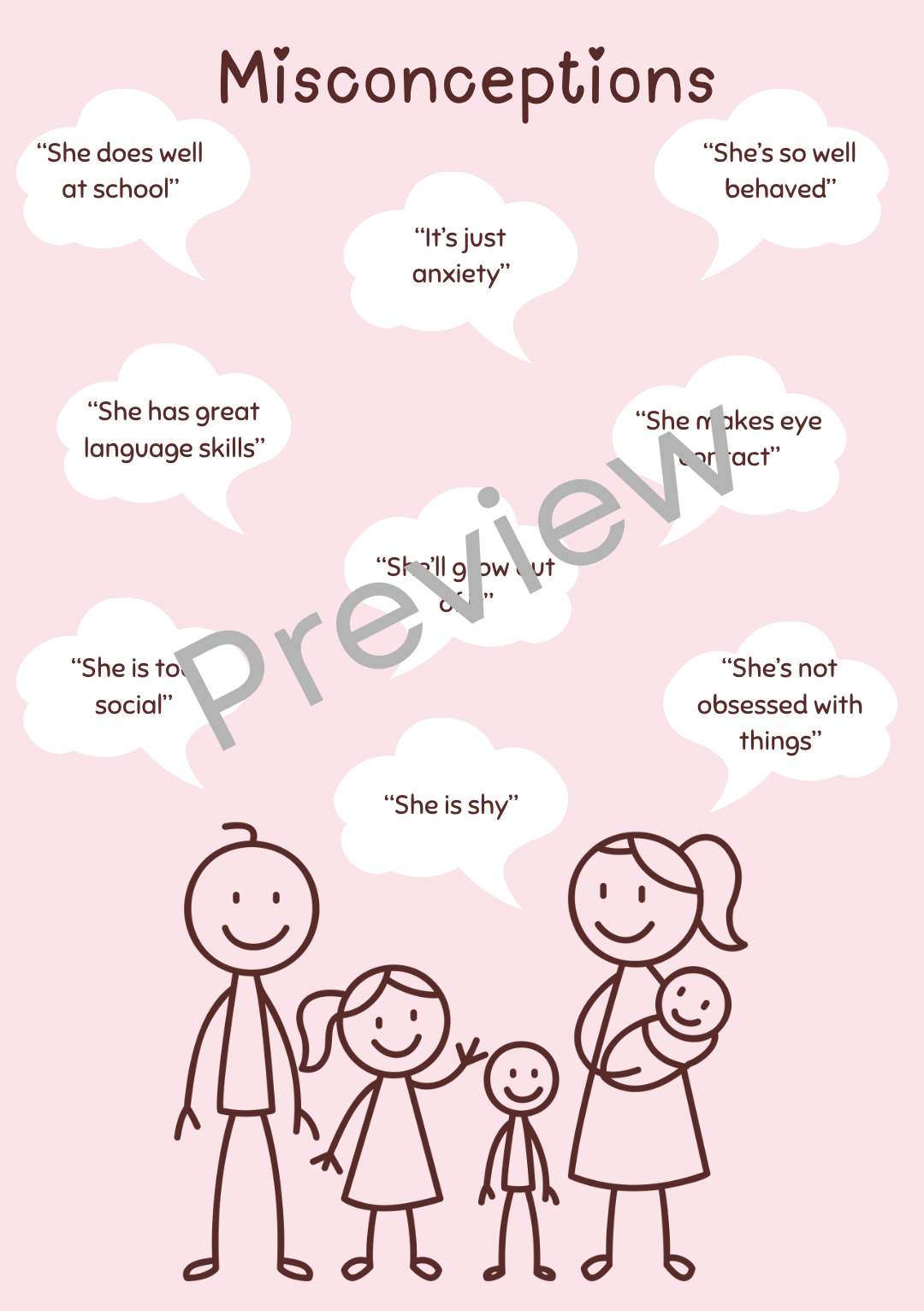 Image 2 of 3
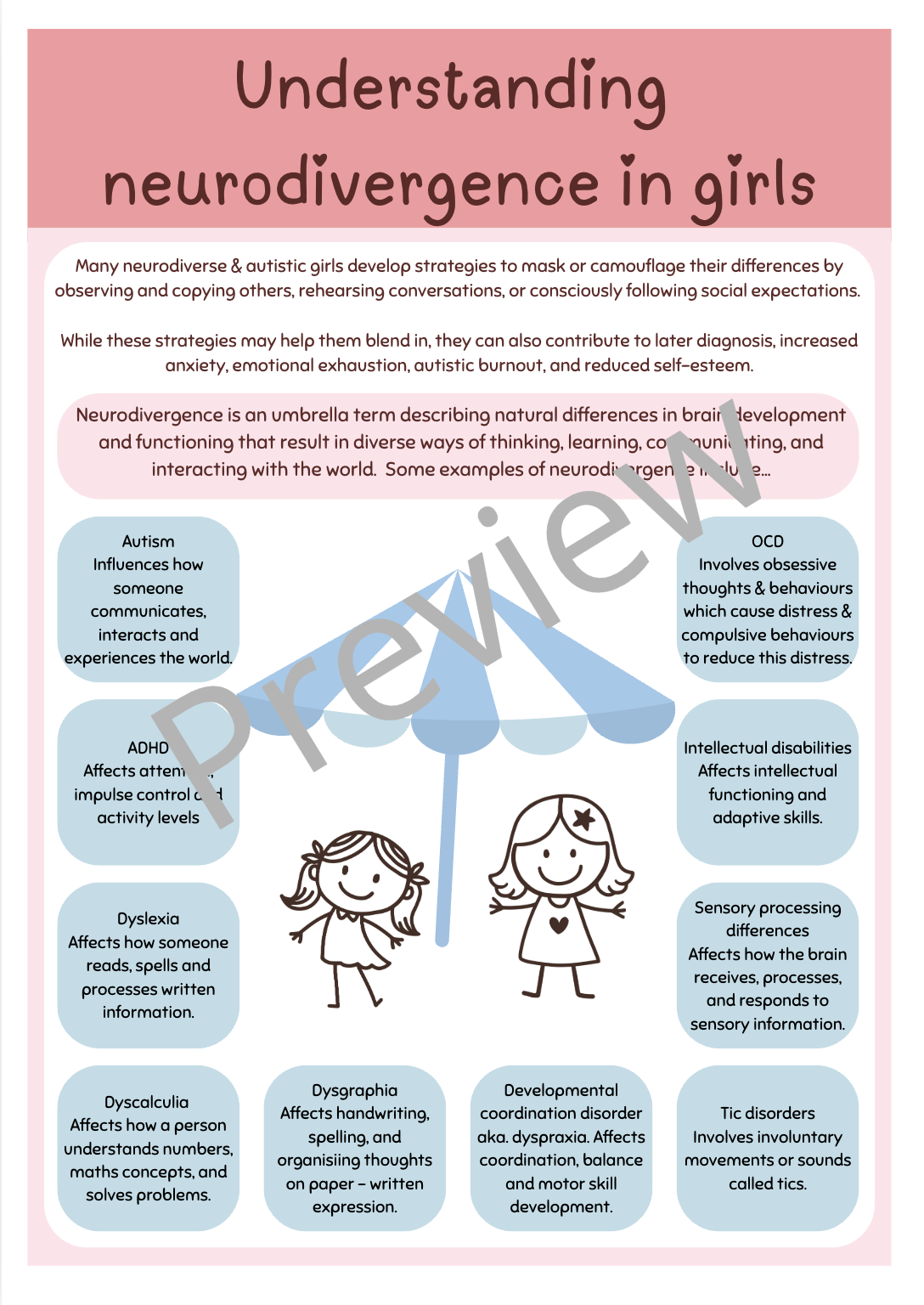 Image 3 of 3
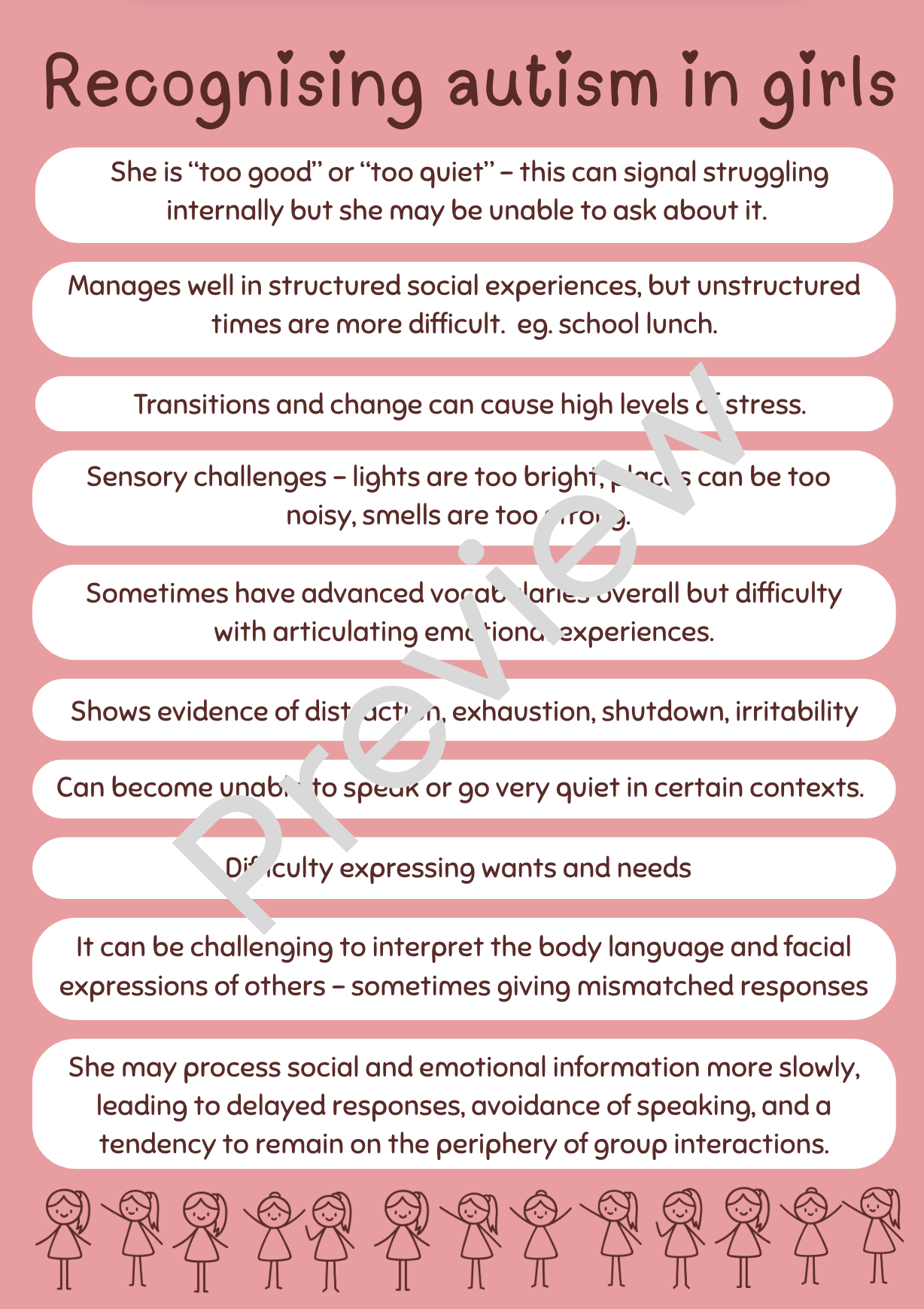
Increase understanding of how autism can present in girls with this neuroaffirming educational visual. Designed to challenge outdated stereotypes, this printable resource highlights common characteristics that may be seen in autistic girls, many of which are often overlooked or misunderstood because autism has historically been researched and recognised using predominantly male populations.
Many autistic girls develop strategies to mask or camouflage their differences by observing and copying others, rehearsing conversations, or consciously following social expectations. While these strategies may help them blend in, they can also contribute to later diagnosis, increased anxiety, emotional exhaustion, autistic burnout, and reduced self-esteem. This resource supports greater awareness of these less-recognised presentations while acknowledging that every autistic person is unique.
Written using current peer-reviewed research, this visual explores topics including masking, sensory differences, emotional regulation, social communication, transitions, shutdowns, selective mutism, internalised anxiety, and communication differences. It provides an accessible overview for professionals, families, and educators wanting to better recognise and support autistic girls.
Perfect for occupational therapists, psychologists, teachers, school counsellors, speech pathologists, paediatricians, disability support workers, university students, and parents. Display it in classrooms, therapy clinics, counselling offices, waiting rooms, universities, or use it during autism education, parent workshops, and professional development.
Perfect for:
Autism in girls
Female autism
Recognising autism in girls
Autism signs in girls
Autism awareness
Autism acceptance
Neurodiversity
Neuroaffirming practice
Masking
Camouflaging
Sensory processing
Emotional regulation
Social communication
Occupational therapy
Psychology
School counselling
Speech therapy
Special education
Parent education
Printable classroom poster
This evidence-informed resource promotes earlier recognition of autism in girls while encouraging a respectful, strengths-based understanding that supports acceptance, inclusion, and neuroaffirming practice.
Increase understanding of how autism can present in girls with this neuroaffirming educational visual. Designed to challenge outdated stereotypes, this printable resource highlights common characteristics that may be seen in autistic girls, many of which are often overlooked or misunderstood because autism has historically been researched and recognised using predominantly male populations.
Many autistic girls develop strategies to mask or camouflage their differences by observing and copying others, rehearsing conversations, or consciously following social expectations. While these strategies may help them blend in, they can also contribute to later diagnosis, increased anxiety, emotional exhaustion, autistic burnout, and reduced self-esteem. This resource supports greater awareness of these less-recognised presentations while acknowledging that every autistic person is unique.
Written using current peer-reviewed research, this visual explores topics including masking, sensory differences, emotional regulation, social communication, transitions, shutdowns, selective mutism, internalised anxiety, and communication differences. It provides an accessible overview for professionals, families, and educators wanting to better recognise and support autistic girls.
Perfect for occupational therapists, psychologists, teachers, school counsellors, speech pathologists, paediatricians, disability support workers, university students, and parents. Display it in classrooms, therapy clinics, counselling offices, waiting rooms, universities, or use it during autism education, parent workshops, and professional development.
Perfect for:
Autism in girls
Female autism
Recognising autism in girls
Autism signs in girls
Autism awareness
Autism acceptance
Neurodiversity
Neuroaffirming practice
Masking
Camouflaging
Sensory processing
Emotional regulation
Social communication
Occupational therapy
Psychology
School counselling
Speech therapy
Special education
Parent education
Printable classroom poster
This evidence-informed resource promotes earlier recognition of autism in girls while encouraging a respectful, strengths-based understanding that supports acceptance, inclusion, and neuroaffirming practice.