 Image 1 of 4
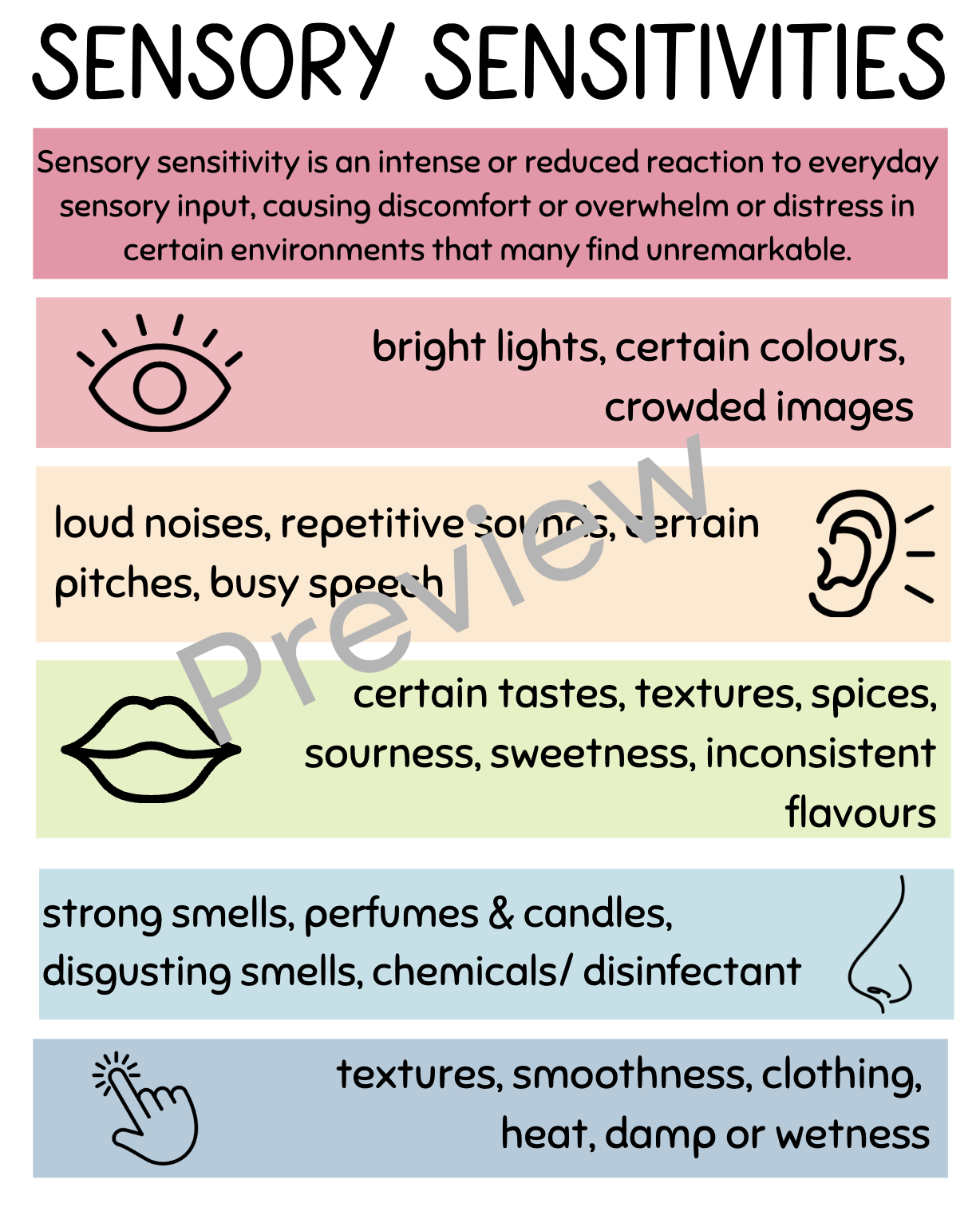 Image 2 of 4
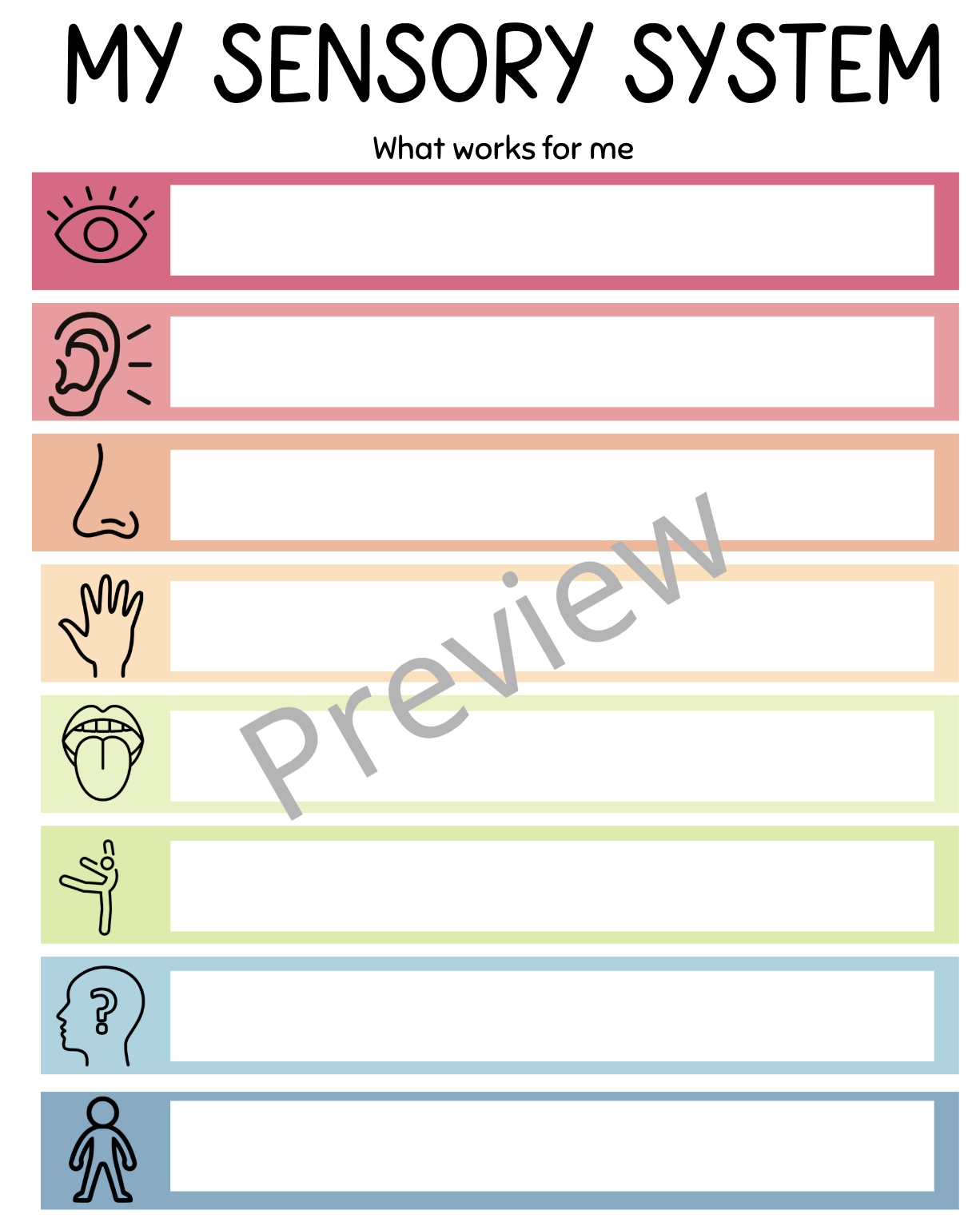 Image 3 of 4
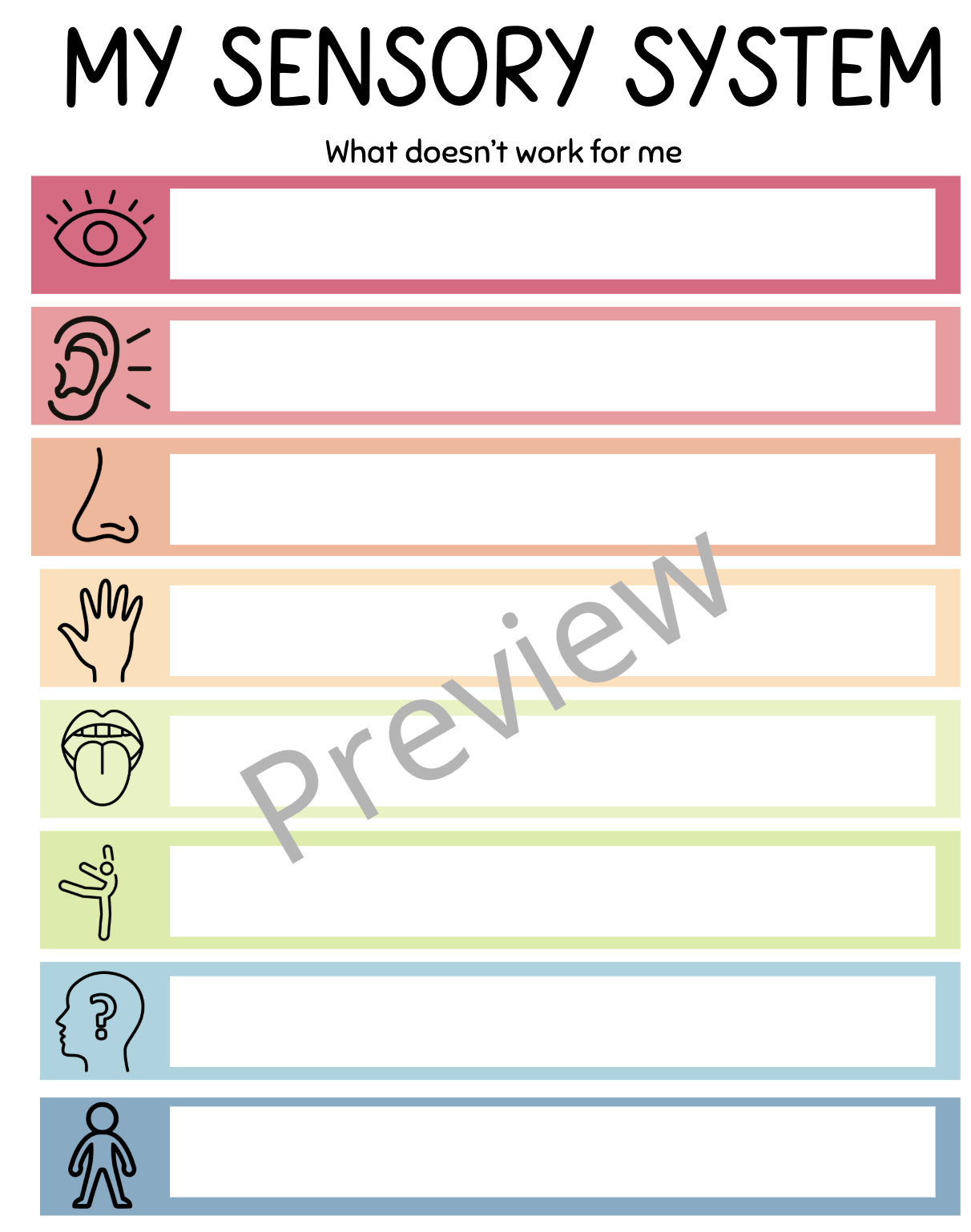 Image 4 of 4
Discover what sensory strategies actually work for each client with this neuro-affirming sensory profile worksheet!
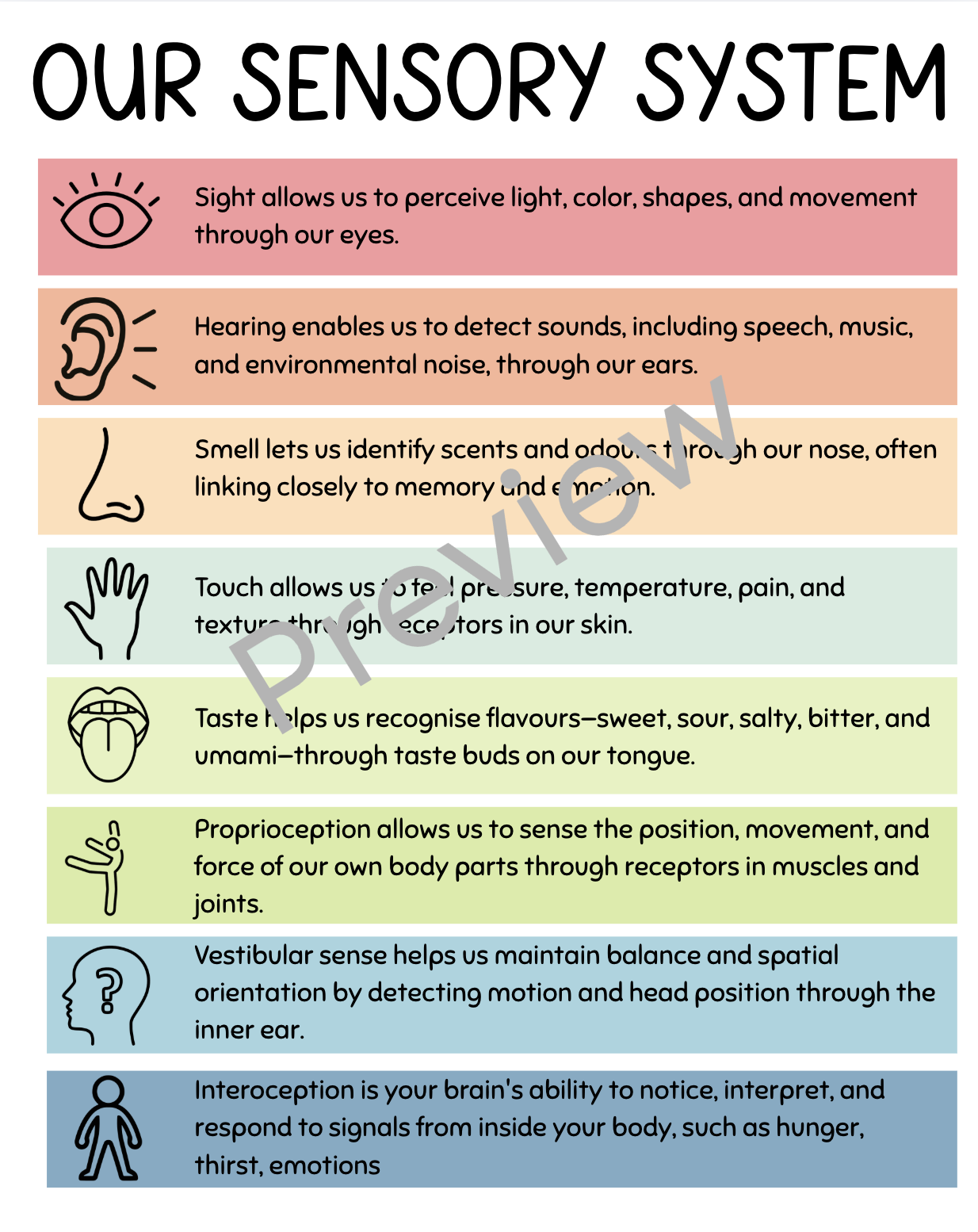
This worksheet includes information on the sensory system, & an activity - what sensory experiences do & don't work for me.
This printable resource helps students identify the sensory experiences that help them feel calm, focused, comfortable, and regulated, as well as those that don't meet their sensory needs. Rather than viewing sensory differences as deficits, this worksheet encourages self-awareness, self-advocacy, and understanding of individual sensory preferences.
Our sensory systems shape the way we experience both our bodies and the world around us. The brain's ability to receive, organise, and interpret sensory information is essential for everyday functioning, influencing self-regulation, social interactions, learning, and participation in daily activities.
Traditionally, five senses were recognised: touch, smell, taste, vision, and hearing. It is now understood that three additional "hidden" sensory systems also play vital roles: the vestibular, proprioceptive, and interoceptive systems.
Individuals may be either under-responsive (hyposensitive) or over-responsive (hypersensitive) within any of these sensory systems. It is also common for someone to experience a combination of sensory profiles, such as being highly sensitive in one sensory area while seeking additional input in another.
Perfect for Occupational Therapists (OTs), teachers, school counsellors, psychologists, speech pathologists, special educators, and parents, this resource can be used during therapy sessions, classroom support, IEP planning, emotional regulation programs, or at home.
Ideal for:
Autism support
ADHD support
Sensory processing differences
Emotional regulation
Self-awareness activities
Self-advocacy
Occupational Therapy
Social-emotional learning (SEL)
Neuroaffirming practice
What's included:
Printable PDF worksheet
Reflection prompts about sensory preferences
Space to identify what helps and what doesn't
Suitable for older children, teenagers, and young adults
A practical, strengths-based resource that supports meaningful conversations about sensory needs while empowering neurodivergent learners to better understand themselves.
Discover what sensory strategies actually work for each client with this neuro-affirming sensory profile worksheet!
This worksheet includes information on the sensory system, & an activity - what sensory experiences do & don't work for me.
This printable resource helps students identify the sensory experiences that help them feel calm, focused, comfortable, and regulated, as well as those that don't meet their sensory needs. Rather than viewing sensory differences as deficits, this worksheet encourages self-awareness, self-advocacy, and understanding of individual sensory preferences.
Our sensory systems shape the way we experience both our bodies and the world around us. The brain's ability to receive, organise, and interpret sensory information is essential for everyday functioning, influencing self-regulation, social interactions, learning, and participation in daily activities.
Traditionally, five senses were recognised: touch, smell, taste, vision, and hearing. It is now understood that three additional "hidden" sensory systems also play vital roles: the vestibular, proprioceptive, and interoceptive systems.
Individuals may be either under-responsive (hyposensitive) or over-responsive (hypersensitive) within any of these sensory systems. It is also common for someone to experience a combination of sensory profiles, such as being highly sensitive in one sensory area while seeking additional input in another.
Perfect for Occupational Therapists (OTs), teachers, school counsellors, psychologists, speech pathologists, special educators, and parents, this resource can be used during therapy sessions, classroom support, IEP planning, emotional regulation programs, or at home.
Ideal for:
Autism support
ADHD support
Sensory processing differences
Emotional regulation
Self-awareness activities
Self-advocacy
Occupational Therapy
Social-emotional learning (SEL)
Neuroaffirming practice
What's included:
Printable PDF worksheet
Reflection prompts about sensory preferences
Space to identify what helps and what doesn't
Suitable for older children, teenagers, and young adults
A practical, strengths-based resource that supports meaningful conversations about sensory needs while empowering neurodivergent learners to better understand themselves.